Twenty years of installing, sanding and repairing hardwood across Lynwood and southeast Los Angeles County — starting with what your house is built on.
Lynwood Wood Flooring has spent more than twenty years installing, sanding, refinishing and repairing wood floors across Lynwood and the cities around it. We install solid and engineered hardwood, refinish worn floors, repair water damage and failed boards, and restore hardwood stairs. It is one trade done properly rather than a showroom that also sends out installers.
The first thing we establish is what your house is built on, because that decides most of what follows. A raised floor over a crawl space takes solid wood nailed to the joists. A concrete slab will not, and the honest answer there is engineered wood with the moisture measured first. Houses here sit both ways, so we check rather than assume.
Everything after that is measurement rather than opinion. We meter the wood and the subfloor, test slabs before material is ordered, and write the readings down. If your floor does not need what you were told it needs, we would rather say so at the estimate than halfway through the job.
Wood flooring installed, refinished and repaired across Lynwood
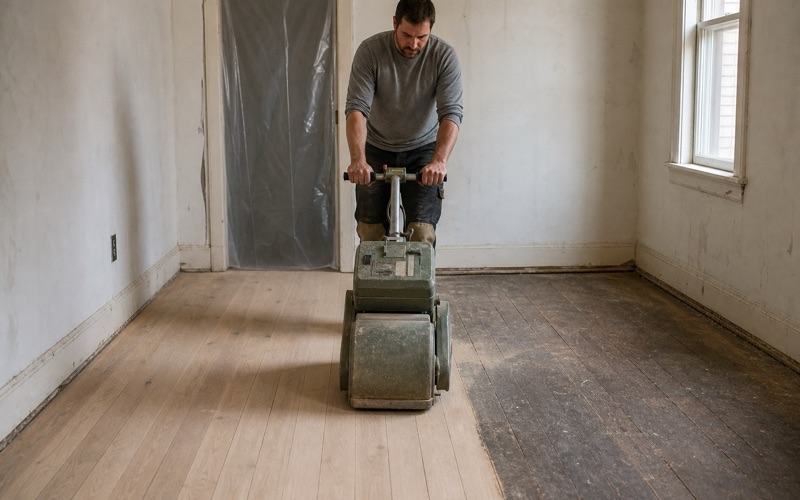
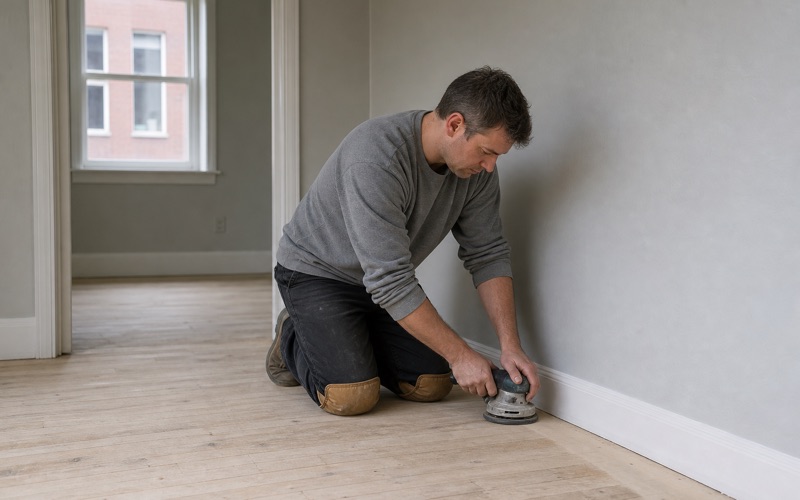
Hardwood Floor Refinishing
Sanding, refinishing and recoating hardwood floors across Lynwood — with the remaining wear layer measured before a full sand is ever recommended.
Water Damaged Hardwood Floor Repair
Drying, assessing and repairing water damaged hardwood across Lynwood — with claim documentation written the way an adjuster reads it.
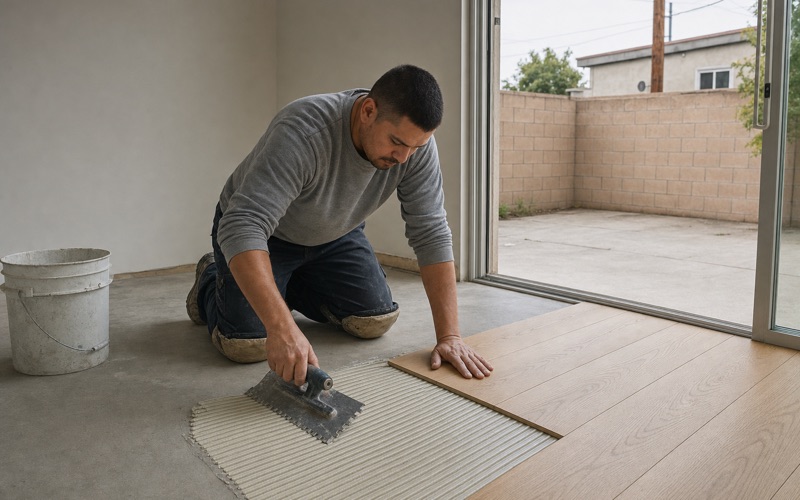
Engineered Hardwood Flooring Installation
Engineered hardwood installed over concrete slabs across Lynwood — glued or floating, with the slab moisture tested and recorded before material is ordered.
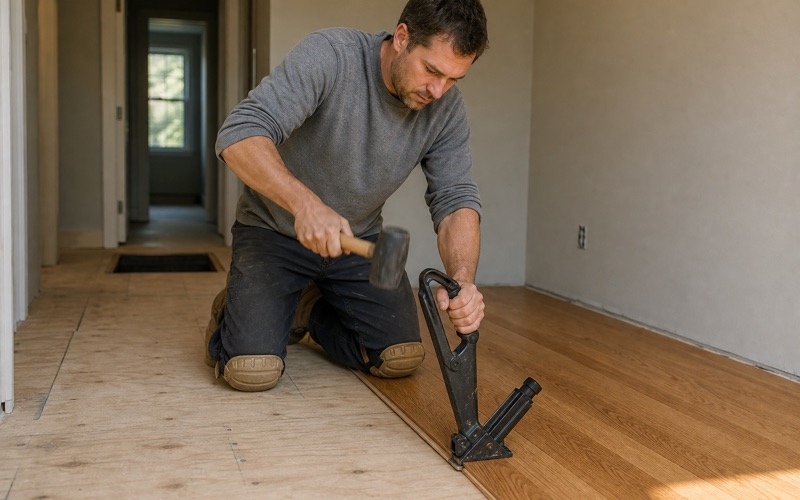
Solid Hardwood Floor Installation
Solid hardwood nailed down over raised floors and crawl spaces across Lynwood — acclimated, metered and fastened to a published spacing schedule.
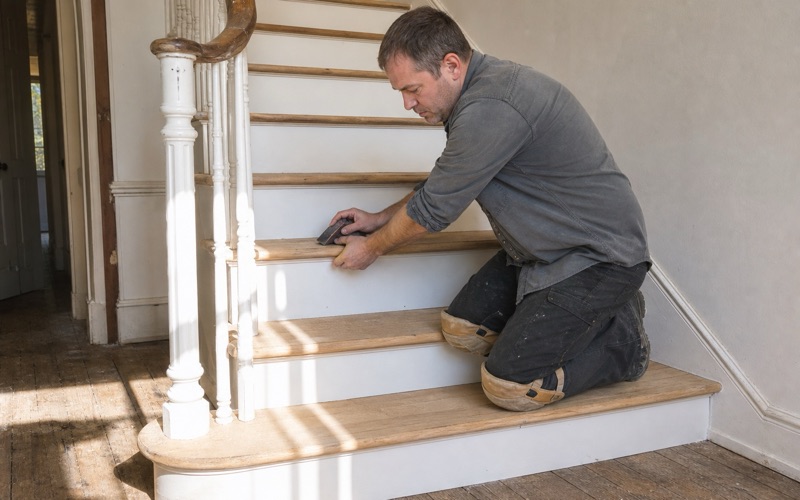
Hardwood Stair Refinishing
Refinishing, capping and rebuilding hardwood stairs across Lynwood — quoted by tread, riser and nosing rather than by the square foot.
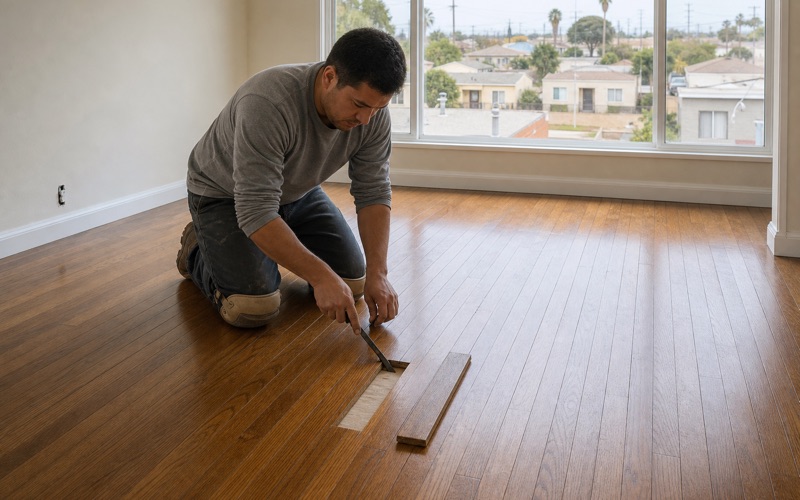
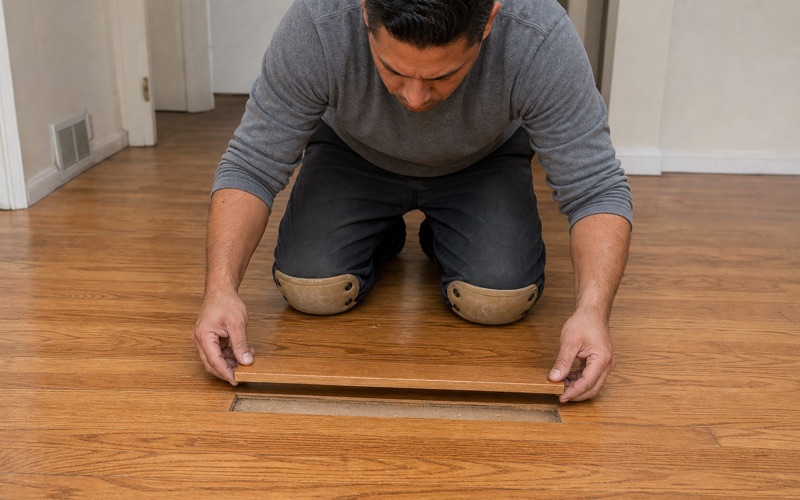
Hardwood Floor Repair
Squeaks, split boards, gaps and worn patches repaired across Lynwood — laced into the existing layout so the fix does not read as a patch.
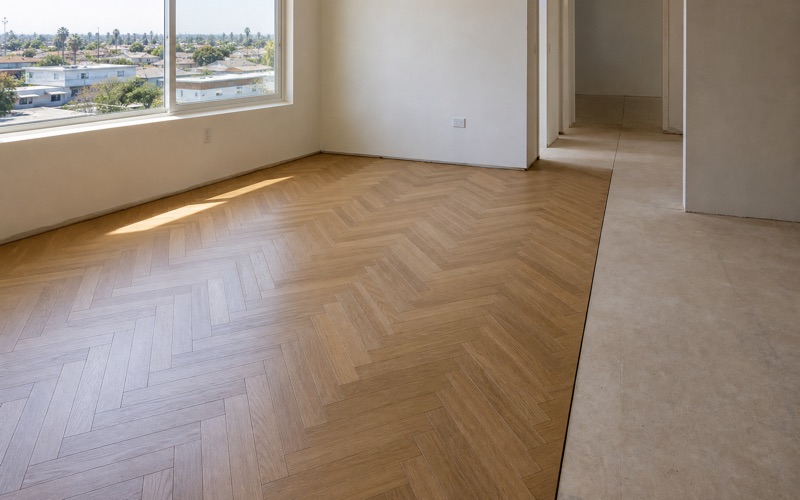
Herringbone Wood Floor
Herringbone, chevron, parquet and wide plank floors installed and restored across Lynwood — laid out from a centerline, not started at a wall.
Commercial Hardwood Flooring
Hardwood installed, recoated and repaired for rentals, offices and common areas across Lynwood — phased around occupancy and quoted with real cure times.
Two Decades of Wood Floors in This Part of Los Angeles County
Twenty Years on Local Floors
We have worked on this housing stock for more than twenty years — the pre-war bungalows, the post-war tract houses, and the stucco apartment buildings between them. That is long enough to know which streets sit on crawl spaces and which sit on slabs. Every estimate is written, itemized and free, with material, labor and extras listed separately rather than rolled into one number.
Why Choose Lynwood Wood Flooring
Foundation Checked First
Every quote starts underneath the house rather than at the front door. A crawl space and a slab support completely different floors, and quoting solid nail-down for a slab is how a job gets re-specified halfway through or fails a year later, so we establish the foundation type before naming a material rather than after the deposit clears.
Slab Moisture on Record
No material is ordered for a concrete slab before an in-situ relative humidity probe has been left in it and the reading written down. A slab that looks and feels dry can still be pushing moisture into the underside of a floor, so the number decides the schedule rather than the calendar, and you get the reading rather than a reassurance.
Meters Set to the Species
Wood moisture content is checked with both pin-type and pinless meters, and the meter is set to the specific gravity of the species going in rather than left on whatever the last job used. An oak reading taken on a walnut setting is simply wrong, and a wrong reading is worse than no reading because it gets trusted.
Finishes That Are Legal Here
The South Coast air district limits wood coatings to 275 grams per liter of VOC, and the rule reaches whoever applies and stores the product, not only the company that made it. Every finish we schedule can lawfully be bought and used in this basin, so no part of your quote depends on a coating nobody can deliver here.
Lead-Safe on Older Houses
Most of the housing around Lynwood predates 1978, and sanding disturbs whatever coatings have accumulated on it since. We use lead-safe work practices and containment as standard on those houses rather than treating it as an optional upgrade, so an older home is prepared properly instead of being sanded like new construction.
Stairs Counted Separately
Stairs are quoted as their own scope, with treads, risers, nosings and skirting counted individually. A staircase carries several times the labor of the same area of open floor, so folding it into a square-foot rate either inflates the whole quote or guarantees the stairs get rushed — and stairs are the part of the job everyone sees closest.
Putting In a New Wood Floor
Slab or Raised Floor: The Question That Decides Everything Else
A raised floor sits on joists over a crawl space and will take solid wood fastened down with cleats or staples. A slab is concrete, holds no fastener and moves moisture upward, so it calls for engineered wood glued or floated instead. We establish which one you have before discussing material, because getting this backwards invalidates every other decision on the job.
Engineered Hardwood Over Concrete
Engineered hardwood is real wood veneer over a stable core of plywood or HDF, which is why it tolerates a slab where solid wood will not. It is the honest recommendation for slab-built houses rather than a downgrade. We install it glued with a moisture-cure urethane adhesive or floating over an underlayment.
Solid Nail-Down Over a Crawl Space
Where the house still has joists under it, solid hardwood nailed or stapled down is the longest-lived floor you can buy — it can be sanded and refinished repeatedly across decades. We follow a fastener spacing schedule rather than nailing by eye, because under-fastened solid flooring is the most common cause of squeaks that appear a year later.
Glue-Down, Floating and Nail-Down
These are three different attachment methods and the substrate usually picks one for you. Nail-down needs a wood subfloor; glue-down bonds the boards directly to a prepared slab; floating locks the boards to each other and rests on an underlayment. We explain which are genuinely available in your house rather than presenting all three as equal options.
Testing a Slab Before Ordering Material
We test concrete with an in-situ relative humidity probe to the ASTM F2170 method, which reads moisture inside the slab rather than at its surface. Wood goes down over a slab reading at or under 75 percent RH; above that it needs a mitigation membrane first. Finding that out before material arrives is the difference between a delay and a failure.
White Oak, Red Oak, Hickory and Walnut
Janka hardness measures how well a species resists denting. White oak sits at 1360 and hickory at 1820, making hickory the hardest common domestic flooring species, while walnut is noticeably softer and prized for color rather than toughness. Red oak carries a pink undertone that shows through most stains, which is why so many red oak floors get restained.
Prefinished or Finished In Place
Prefinished boards arrive with a factory coating already cured, so there is no drying time and no odor, but the joints stay slightly beveled and cannot be sanded flat later. Site-finished floors are sanded and coated after installation, giving a continuous flat surface and any color you want. We quote both and explain what each costs you in the long run.
Plank Width and What a Room Can Carry
Wide planks read as calmer and more current, but a wider board moves more across its face with humidity, so wide plank on a slab needs tighter moisture control than narrow strip flooring does. In a small or narrow room a very wide plank can also read as fewer, larger lines. We match width to both the room and the substrate.
Underlayment and Vapor Retarder
What goes under the floor is not filler. A vapor retarder slows moisture coming up from a crawl space or slab, and an underlayment such as cork adds a cushion and cuts sound transmission between floors. In an upstairs unit the underlayment specification is often what a building’s own rules actually govern, so we settle it before installation rather than during.
Where Wood Meets Tile: The Saltillo Problem
In a lot of houses here the wood does not run wall to wall — it stops where saltillo or another tile begins, and that junction is the detail everyone looks at. The two materials sit at different heights and expand differently, so the transition needs a reducer or threshold chosen deliberately rather than left over.
Bringing Back the Floor You Already Have
Sand and Refinish, or Screen and Recoat
A full sand takes the floor to bare wood through a grit sequence and rebuilds the finish; a screen and recoat abrades only the existing coating and adds a fresh layer, spending no wood. Recoating costs a fraction of refinishing and works whenever the finish is worn but not breached. We check which one your floor actually needs.
Changing a Floor’s Color Without Sanding It
This is one of the most common things people ask us and the answer is limited but real. A tinted coating over a properly abraded finish can shift a floor’s tone without taking it to bare wood, though it cannot lighten a dark stain that has already penetrated the grain. Where the goal is a genuine color change, sanding is the only honest route.
How Many Refinishes a Floor Has Left
Solid boards have usable wood above the tongue and each full sanding spends some of it. Engineered boards have only their wear layer, and a thin one may not survive a single pass. We measure what remains before recommending a sand, because sanding a floor that has nothing left to give turns a repairable floor into a replacement.
What Dustless Sanding Actually Covers
Dustless sanding means the machines run into a containment and extraction system that captures most of the dust at the source. It is a large improvement over open sanding, and it is not literally zero dust. We would rather describe it accurately than promise a word the equipment cannot deliver.
Matching New Boards Into an Existing Floor
When boards are replaced or a wall comes out, the new wood has to be woven into the old rather than butted against it in a straight seam. Lacing the joints staggers the transition so the repair disappears once the floor is sanded and finished as one surface. Color matching happens at the finish stage, not at the lumber yard.
Taking a Dark Floor Lighter
Dark stained floors were installed everywhere for years and a lot of people now want them back to something natural. That is a full sand: the stain lives in the wood, not on it, so it has to be cut away. The species underneath decides how light the floor can actually go, which we establish with a test area before committing.
Refinishing Over an Old Magnesite Topping
Some older houses in this area have magnesite, a poured floor topping used in the 1920s and 1930s, sitting on or beside the original wood. It is not hardwood and it does not respond to sanding the way wood does. We identify it before machines come out, because treating magnesite as a wood floor damages it and removing it is a different job entirely.
Recoating Rental Units Between Tenants
A great deal of the housing here is rented, and a floor between tenants usually needs restoring rather than replacing. A screen and recoat can turn a unit around in a fraction of the time and cost of a full refinish, and it keeps the wood for the next turnover. We schedule around vacancies so the unit is back in service quickly.
Sheen: Matte, Satin and Semi-Gloss
Sheen is measured as gloss level, but you choose it by how the room reads. Higher gloss reflects more light and shows every scratch; matte and satin hide wear and traffic lanes far better, which is why they dominate now. In a room with big windows, lower sheen is the difference between a floor that looks calm and one that looks streaked.
The Finish Shelf Under This Air District’s Limit
Because wood coatings are capped at 275 grams per liter of VOC here, some products sold freely in other states are not available for use in this basin. In practice that pushes the work toward waterborne two-component finishes and hardwax oils. We schedule from what is legally supplied locally, so the plan does not depend on a product that cannot be bought at this address.
When the Floor Has Gone Wrong
Cupping and Crowning
Cupping is when board edges sit higher than their centers, and it means the underside is wetter than the top. Crowning is the reverse and often follows sanding a cupped floor too early. Both are moisture problems rather than carpentry problems, so we meter the wood and the subfloor and find the source before touching the surface.
Buckling, and Why It Is Rarely the Floor’s Fault
Buckling is a floor lifting clear of the subfloor, and it almost always means either water got in or the floor had nowhere to expand at the perimeter. Wood needs an expansion gap hidden under the baseboard; without one, a humid stretch has nowhere to go but up. We find the cause first, because a relaid floor over the same conditions buckles again.
Squeaks, From Above or From Below
A squeak is movement — a board against a fastener, or a subfloor against a joist. Where there is a crawl space or an open ceiling underneath, the durable fix is from below and leaves the finished floor untouched. Where there is not, it is fastened from above and concealed. We check what access you have before choosing.
Gaps That Open and Close With the Season
Solid wood shrinks in dry months and swells in humid ones, so thin gaps that appear and close again are the floor behaving normally. Gaps that stay open year-round, or that appear in only one part of a room, are a different matter and point to a moisture problem or a failed installation. We measure across seasons rather than filling on sight.
Hollow-Sounding Boards and When It Means Termites
A board that sounds hollow underfoot may have lost its bond to the subfloor. It can also mean the wood beneath has been eaten out, which here is a real possibility rather than a remote one. We open a hollow area rather than filling over it, and pest damage has to be dealt with before any flooring work.
Pet Stains That Have Reached the Wood
A stain sitting on the finish comes off with the finish. One that has gone through into the grain is in the wood itself, and no amount of sanding at a normal depth will lift a black urine stain that has reached the subfloor. In those areas board replacement is the only real repair, woven into the surrounding floor so the patch disappears.
Water Damage: Sudden Versus Slow
How the water arrived usually decides who pays for it. A supply line that lets go without warning is treated very differently from a slow leak that has been quietly working under a dishwasher for a year. We document the extent, the moisture readings and the boundaries of the affected area, which is the record an adjuster works from.
Replacing Boards Instead of the Whole Floor
A damaged area rarely justifies a new floor. Individual boards can be cut out and replaced, and a dutchman patch can repair a localized defect within a single board. The replacement is laced into the existing layout and the whole floor is then sanded and finished as one, which is what makes a good repair invisible.
Scratches, Dents and Worn Traffic Lanes
Surface scratches in the finish are a recoating job. Dents are compressed wood fiber and need sanding or, if deep, board replacement. Worn traffic lanes down a hallway are the most common thing we are called about, and if the wear has not gone through to bare wood a screen and recoat restores the whole floor for far less than refinishing it.
Subfloor Rot Found Once the Floor Comes Up
Sometimes the damage is under the floor rather than in it. Where a leak has been running, the subfloor and occasionally the joists have to be cut out and replaced before any new flooring goes down. We would rather find it at demolition and tell you immediately than lay a new floor over compromised structure and have it fail.
Choosing the Look
Herringbone and Chevron
These get used interchangeably and they are not the same. Herringbone lays rectangular boards at right angles in a staggered zigzag, with the ends square-cut. Chevron mitres the board ends so they meet in a continuous point, forming clean unbroken Vs. Chevron costs more because every board is cut at an angle, and the difference is obvious once you know it.
Wide Plank in a Post-War House
Wide boards read as current and calm, and they work in mid-century tract houses far better than people expect. The caution is technical rather than aesthetic: a wide board moves more across its width, so on a slab it needs the moisture question settled properly first. Done right, wide plank makes a modest room read larger rather than busier.
Wire-Brushed, Hand-Scraped and Distressed
These are three different surface textures. Wire-brushing scours out the softer grain to leave a subtle open texture; hand-scraping produces a rolling, undulating surface; distressing adds deliberate marks and wear. All three hide everyday scratches far better than a smooth floor, which is why they suit houses with dogs and children.
Whitewashed, Blonde and Gray Floors
Lightening a floor is the dominant direction right now, after two decades of dark stain. Whitewashing leaves a translucent white in the grain; blonde tones let the natural color through; gray reads cooler and pairs with a modern palette. How light a floor can go depends on the species underneath, which is why we always test on the actual boards first.
French Oak and What the Name Promises
French oak refers to European white oak, typically milled wide and long with a more open grain and a warmer, browner base tone than American white oak. It is a genuine material distinction rather than only a marketing term, though the name gets applied loosely. We tell you which you are being quoted and what the difference costs.
Reclaimed Wood and What to Check
Reclaimed boards carry a history no new material imitates. They also carry risk: old fasteners, inconsistent thickness, and moisture content nowhere near where your house needs it. We meter reclaimed stock on arrival and check it for metal before it goes near a saw.
Wood Floors in a Spanish Revival House
The Spanish and Mission houses around here have their own logic. Wood floors in them tend to be warmer in tone and often meet tile rather than running throughout, and heavy modern gray reads wrong against arched openings and plaster. We work with what the house already is instead of installing the same floor we would put in a new build.
Borders, Inlays and Feature Stairs
A border frames a room by running boards perpendicular around its perimeter, and an inlay sets a contrasting pattern into the field. Both are traditional work that almost nobody offers now. The same thinking applies to a staircase, which is the most visible woodwork in most houses and worth treating as a feature rather than a circulation route.
Parquet, and Restoring the Parquet Already There
Parquet is wood laid in geometric blocks rather than long boards, and Versailles panels are its most elaborate form. A lot of older houses here have parquet already, often under carpet, and it can usually be restored rather than replaced. Sanding parquet requires working across multiple grain directions, which is a different skill from sanding a plank floor.
Treads, Risers and Nosings as a Visible Detail
A staircase is made of parts with names: the tread you step on, the riser between them, the nosing that overhangs the front edge, and the skirt board running up the wall. Whether they are stained to match the floor or painted in contrast changes the whole hallway. Where stairs are carpeted, a retro tread can cap the existing stringer without a rebuild.
Areas We Serve
Lynwood Wood Flooring provides wood flooring throughout the greater Lynwood area, with the same crews and the same standards on every job.
Wood Flooring in South Gate
Wood Flooring Services in East Rancho Dominguez
Willowbrook Wood Flooring
Wood Flooring in Compton
Wood Flooring Services in Paramount
Watts Wood Flooring
Wood Flooring in Cudahy
Wood Flooring Services in Walnut Park
Bell Gardens Wood Flooring
Wood Flooring in Florence-Graham
Wood Flooring Services in Huntington Park
West Rancho Dominguez Wood Flooring
Wood Flooring in Bell
Hardwood Floor Refinishing Services in Downey
Maywood Wood Flooring
Good to know
Frequently Asked Questions
How much does a wood floor cost in Lynwood?
Cost moves on the material, whether the house sits on a slab or a crawl space, and how much the subfloor needs doing. Engineered wood glued to concrete and solid wood nailed to joists are different jobs with different labor, so a square-foot number quoted before anyone has looked underneath is a guess. Our written quote separates material from labor and lists the add-ons that make two bids look different.
Can I have real wood floors if my house is on a concrete slab?
Yes, but the method changes. On a slab we install engineered wood, glued down or floating, because a solid board fastened to concrete has nowhere to move and nothing to hold a fastener. Before ordering we test the slab with an in-situ relative humidity probe and write the reading down. Wood goes over concrete reading at or under 75 percent RH; above that the slab needs mitigation first.
How long does refinishing take, and can we stay in the house?
A straightforward sand and refinish runs several days: the grit sequence, the coats, then cure time. Most of the disruption is drying rather than sanding. You can often stay if the work is contained to part of the house, but finished rooms must stay empty while the coating cures and furniture cannot go back early. We give you the cure schedule before we start.
How many times can a hardwood floor be refinished?
It depends on how much wood sits above the tongue, not on the floor's age. A solid board has a usable depth that each full sanding spends a little of. An engineered board has only its wear layer, and some are too thin to sand at all. We measure what is left first — if there is not enough wood, a recoat or a board-level repair is the honest answer.
Do you work on stairs, or only floors?
Stairs are their own scope and we quote them that way. Treads, risers, nosings and the skirt board are counted individually rather than folded into a square-foot rate, because a staircase carries far more labor per square foot than open floor. We refinish existing stairs, cap carpeted stairs with retro treads over the existing stringer, and match new treads to a floor already down.
My floor is cupping. Does it need replacing?
Usually not, and replacing it before finding the moisture source guarantees the new floor does the same thing. Cupping means the underside of the boards is wetter than the top, so the fix is upstream: a crawl space needing a vapor retarder, a slab moving moisture, or a leak. Many cupped floors flatten once the source is dealt with and then only need sanding.
Are the finishes you use legal to sell in Los Angeles?
This matters more here than most places. The South Coast air district caps wood coatings at 275 grams per liter of VOC, and the rule reaches anyone who applies or stores a non-compliant coating at a job site, not only the manufacturer. The finish shelf in this basin is genuinely shorter as a result. Everything we schedule can legally be bought and applied here.
Do you take extra precautions in older houses?
We use lead-safe work practices as standard on houses built before 1978, which covers most of the older stock around here. Sanding disturbs whatever coatings have accumulated on the floor and trim since, so containment and cleanup are part of the job rather than an upgrade. We build it into the quote instead of raising it once the machines are running.
Do you handle insurance work for water-damaged floors?
Yes, and the documentation matters as much as the carpentry. We record the extent of the damage and where the floor runs continuously without a doorway or threshold to break it, because that often decides how much of the floor a claim treats as one area. You get the same written scope your adjuster is reading, so the two versions match.
Ready to Get Started?
Request a free quote today and we'll get back to you fast.