
Lynwood Wood Flooring provides commercial hardwood flooring across Lynwood, CA and the surrounding cities including South Gate, East Rancho Dominguez, Willowbrook, Compton and Paramount. Commercial here mostly means the buildings this area actually has — rental houses and small apartment buildings, offices and studios above shopfronts, church and community halls, and the common areas that connect them.
Much of this service area is renter-occupied, and in several of the neighborhoods around us the majority of housing is. That makes the property owner, not the occupant, the person who decides about flooring, and it makes the economics different. A floor in a rental is a repeating cost across turnovers rather than a one-time improvement, which changes what the right specification is.
So the questions we get asked here are different ones. Not what looks best, but what survives another five tenancies, how quickly a unit can be back in service, whether the work can be phased around people still using the space, and what can be documented for a deposit conversation. Those are the terms this page is written in.
Rental and Multifamily Property
Turning Units Around
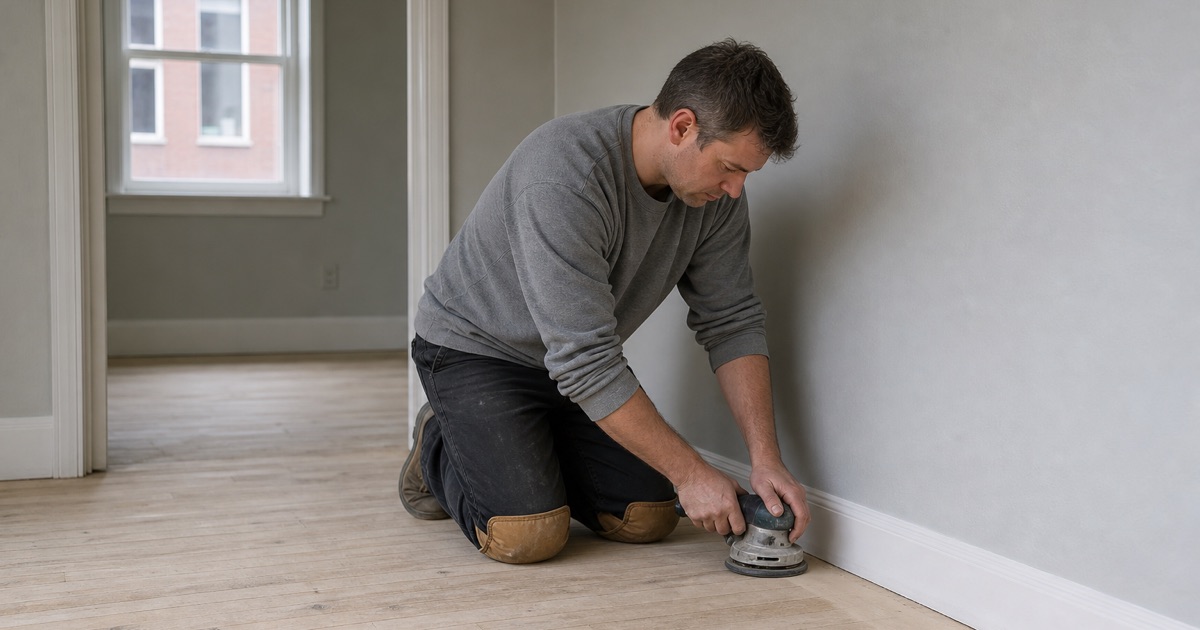
Between tenancies the usual need is restoration rather than replacement, and a screen and recoat is the workhorse. It abrades and recoats the existing finish without removing wood, which means it costs a fraction of a refinish, takes far less time, and leaves the floor’s sandable depth intact for future turnovers. A floor treated this way repeatedly outlasts one that gets fully sanded every few years.
Documenting Condition
Floor condition is one of the most frequently disputed items on a deposit, partly because California bars deductions for ordinary wear and tear without defining what that means. We do not adjudicate that, but we do produce a proper record — dated photographs, the extent and location of damage, and a plain statement of whether it is surface wear in the finish or damage that has reached the wood. The distinction is usually the whole argument.
Scheduling Around Vacancy
A vacant unit is a unit earning nothing, so the schedule is the specification here as much as the finish is. We plan around the vacancy window rather than our own convenience, and we are direct about which floors will not fit into a short turnaround. A full sand and multi-coat finish has a cure time that cannot be compressed, and pretending otherwise just moves the damage to the next tenant.
Offices, Studios and Retail
Traffic Patterns, Not Traffic Volume
Commercial wear is concentrated rather than general. It arrives in the entry, along the route to the counter or the lift, and under every chair. That means specification should follow the pattern rather than the square footage — a harder wearing finish where the traffic actually runs, and a plan for the areas that will need attention first rather than treating the whole floor as one surface.
Finish Selection for Commercial Traffic
Commercial-grade waterborne finishes are considerably more resistant to abrasion and chemicals than a domestic specification, and they can be recoated on a maintenance cycle before wear ever reaches the wood. Everything we specify has to be legally supplied and applied in this air district, where wood coatings are capped at 275 grams per liter of VOC. That constraint is real and local, and it shapes the available options.
Working Around an Operating Business
Most commercial work here happens in phases, with sections closed and reopened in sequence so the space keeps functioning. Evening and weekend blocks are common. It extends the overall programme and it is frequently what makes the job possible at all, since few small businesses can close for a week. We map the phasing before starting so you know what is unavailable and when.
Common Areas and Upstairs Units
Sound Between Units
Where hard flooring goes above another occupied unit, sound transmission is usually governed by the building’s own rules rather than one universal figure, and requirements vary between buildings. The underlayment specification is what typically satisfies it, and it needs establishing in writing before installation rather than after a complaint. We check what your building actually requires rather than assuming a standard number applies.
Corridors, Lobbies and Stairs
Common areas take the heaviest and most continuous traffic in any multi-unit building, and their staircases take more than that. These are also the areas everyone sees, including prospective tenants. Stairs in common areas are quoted by tread, riser and nosing exactly as they are in a house, because the labour is the same regardless of who owns the building.
How the Work Gets Scheduled
Phasing and Access
We start by establishing what has to stay open, what can close and for how long, and where materials and machinery can be staged. Access frequently constrains the sequence more than the flooring does, particularly in occupied buildings with a single stair or lift, and it is far better resolved on paper beforehand than discovered on the first morning.
Cure Times Quoted Honestly
A finish continues hardening well after it stops feeling wet, and rolling loads are what damage a floor during that window. Chair castors and equipment returning early cause more damage to new commercial floors than foot traffic ever does. We quote the real cure schedule for the specific product and plan reopening around it, rather than quoting an optimistic number and letting the floor absorb the difference.
- 20+ Years in Southeast LA
- Free Written Estimates
- Licensed & Insured