Lynwood Wood Flooring works on rental and owner-occupied wood flooring throughout Florence-Graham, and a majority of what we do here is turnover work. This is one of the largest communities we serve and one of the most heavily rented — only around a third of homes here are owner-occupied — which means the person deciding about a floor is usually a landlord or a property manager rather than the person living on it.
That changes the economics completely. An owner-occupier is buying a floor they will look at for twenty years. A property owner is buying a floor that has to survive an indefinite series of tenancies, be restorable quickly and cheaply between them, and still be there in fifteen years without having been sanded to nothing along the way.
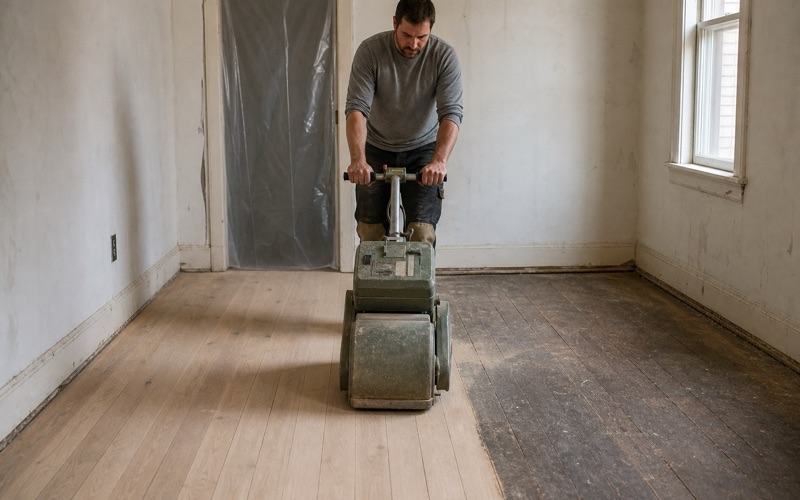
The single most useful thing we can tell that second group is this: stop sanding. A full refinish between every tenancy consumes a floor’s entire life in a couple of decades. A recoat does the same visual job, costs a fraction as much, takes a fraction of the time, and spends no wood at all.
Recoating Between Tenancies
What a Recoat Actually Does
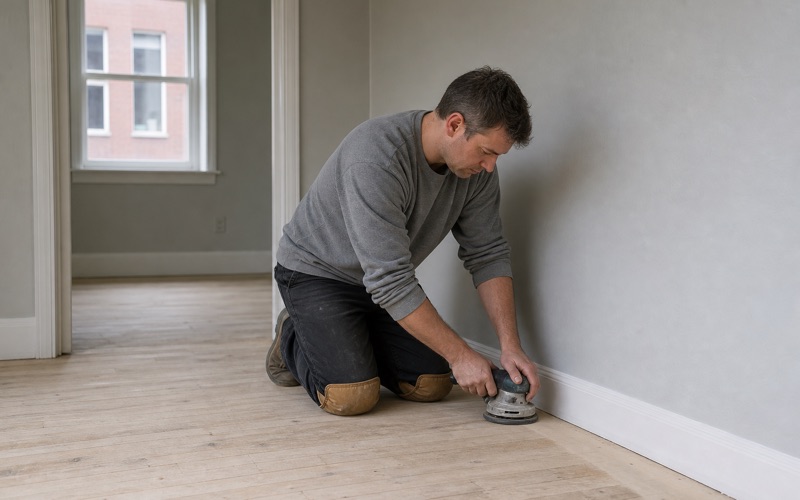
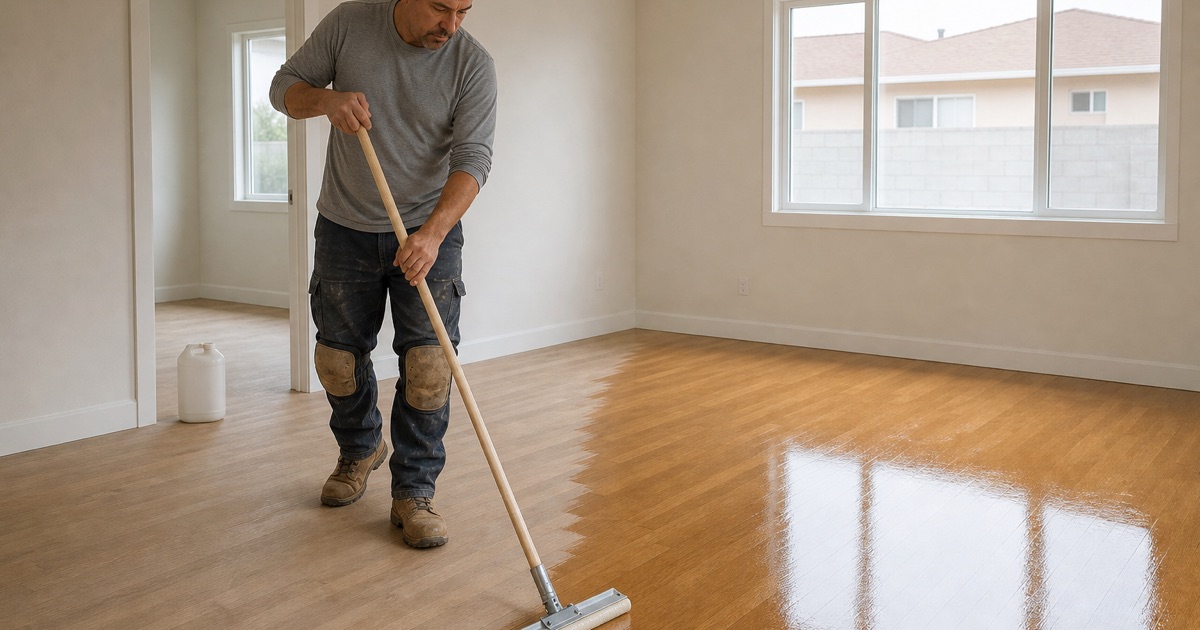
A screen and recoat abrades the existing finish just enough to key it, then applies fresh coating over the top. No wood is removed. The floor comes back looking restored because what was worn was the coating rather than the timber, and the timber underneath was never the problem. For a floor that has been maintained rather than neglected, this is the correct treatment.
It is also far less disruptive to a building with other occupants. There is no drum sander running for days, dramatically less dust, and a much shorter period during which the unit is unusable. In a multi-unit property where neighbours are living either side of the work, that difference matters beyond the unit being turned.
The cost and time difference is what makes it decisive for rental property. A recoat is a fraction of the price of a full sand and finish and puts a unit back in service in a substantially shorter window. Across a portfolio and across years, the difference between recoating on a cycle and sanding on a cycle is measured in both money and in whether the floors still exist at the end of it.
The Limit, and It Is Absolute
Recoating works only while the finish layer is continuous. Once traffic has worn through to bare wood anywhere, or a stain has penetrated the grain, a recoat seals that damage under a new surface permanently. The limitation is not gradual — it is a threshold. We check the traffic lanes and the areas by the doors, because those are where it breaks through first.
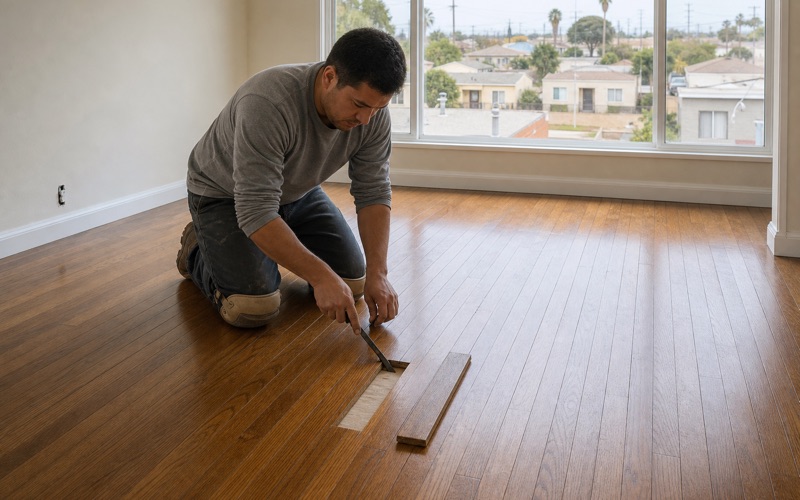
Where a floor is mostly recoatable with one or two areas past that point, the answer is often a combination rather than a decision between the two. Damaged boards get replaced and blended, and the rest of the floor gets recoated. That keeps the cost close to a recoat while dealing with the parts that genuinely need more, and it is worth asking for rather than accepting a full sand by default.
Running It as a Cycle
Treated as maintenance rather than rescue, recoating makes a floor effectively permanent. A floor recoated before wear ever breaks through never needs sanding again and keeps all of its depth. The floors that reach us worn to the tongue almost always got there through neglect punctuated by full sandings, rather than through use — the maintenance approach costs less over a lifetime and preserves far more wood.
For an owner holding property long term this is the whole argument. A floor recoated on a cycle stays serviceable indefinitely and never needs replacing. A floor sanded at every turnover has a countable number of tenancies left in it, after which the only remaining option is a new floor at many times the cost of the recoats that were skipped.
Looking for wood flooring closer to Huntington Park? See Wood Flooring Services in Huntington Park.
Documenting Floor Condition
Why the Record Matters
Floor condition is among the most frequently disputed items on a deposit, partly because California bars deductions for ordinary wear and tear without ever defining the term. We do not adjudicate that and would not try to. What we do is produce a clear record — dated photographs, the extent and location of damage, and a plain statement of what type it is.
Wear Versus Damage
The distinction that usually settles these conversations is whether the problem is in the finish or in the wood. Scuffing, dulling and scratched coating are wear on a consumable surface. Gouges into the timber, water damage, and pet staining that has reached the grain are damage to the floor itself. Those are different categories with different costs, and separating them clearly is more useful than characterising the floor as a whole.
We write it that way in the scope for exactly that reason. A report saying the floor needs a recoat because the finish is worn describes something different from one saying four boards need replacing because liquid reached the subfloor, and a landlord and tenant reading the same document can usually see which is which without needing anyone to arbitrate.
Photographs That Are Actually Useful
Condition photographs need to show location as well as damage, which means wide shots establishing which room and which part of it, alongside close work showing the defect. Undated close-ups of a scratch prove very little. We take both, dated, at the start of any turnover job so there is a record of what was there before we touched it.
The same record is worth having at the other end. Photographs of the completed floor establish the condition a new tenancy started from, which is the baseline any future conversation will be measured against. Owners who do this consistently find the discussions get shorter, because there is very little left to interpret.
Specifying a Floor for a Rental
Choosing for Recoatability
The most valuable property in a rental floor is that it can be refreshed without being rebuilt. That points toward site-finished floors or engineered products with a wear layer generous enough to take future work, and away from very thin engineered product where the only options at end of life are replacement. The cheapest floor to install is frequently the most expensive to own.
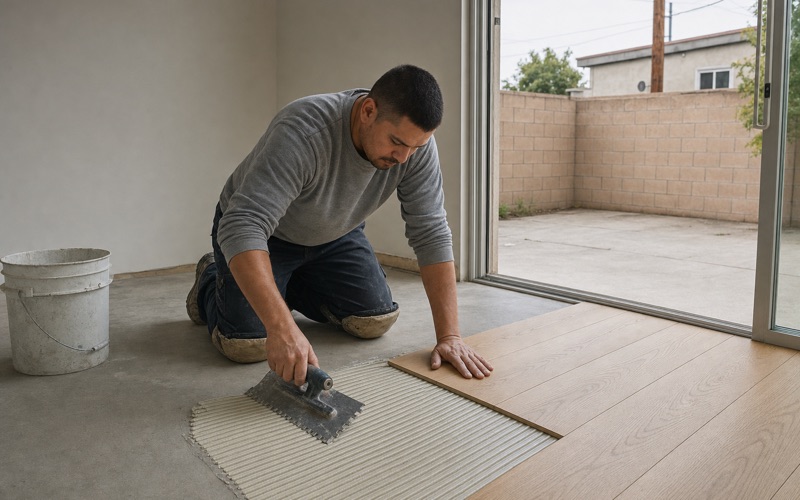
Where the property sits on a slab, that consideration bears directly on the engineered product chosen. Two boards at the same price can carry very different wear layers, and the thicker one is what makes future recoating and eventual sanding possible rather than forcing replacement. It is the specification worth asking about before anything else on a rental job.
Finishes That Take Traffic
Commercial-grade waterborne finishes resist abrasion considerably better than a standard domestic specification and are straightforward to recoat on a cycle. Everything specified has to be legally supplied and applied in this air basin, where wood coatings are capped at 275 grams per liter of VOC, which shapes the options available locally. Within that constraint there is plenty that performs well.
Sheen and Texture Choices That Age Well
Higher gloss shows every scratch and every scuff, which in a rental means the floor looks tired long before it is. Matte and satin hide wear far more effectively. Textured surfaces — wire-brushed and hand-scraped — hide it better still, which is why they suit properties that turn over regularly and are not being watched daily by an owner.
Scheduling Around Vacancy
The Empty Unit Is the Real Cost
A vacant unit earns nothing, so the schedule is as much a specification as the finish is. We plan around the vacancy window rather than our own convenience, and we are direct about which floors will not fit into a short turnaround. A full sand and multi-coat finish carries a cure time that cannot be compressed, and pretending otherwise moves the damage onto the incoming tenant.
Cure Time Before Furniture
A finish keeps hardening after it stops feeling wet, and furniture arriving early is the most common cause of damage to newly finished floors. In a turnover that pressure is acute, because someone is waiting to move in. We give the actual cure schedule for the product going down and plan the handover around it rather than quoting an optimistic date and letting the floor absorb the difference.
Multiple Units at Once
Where several units are being turned together there are real efficiencies — one mobilisation, one material order, consistent specification across the property, and a sequence that keeps our crew moving rather than returning repeatedly. For owners with more than one unit in a building it is usually worth batching the work rather than treating each vacancy as an isolated job.
Batching also keeps the property visually consistent, which matters more than it sounds. Units turned individually over several years drift apart in color and sheen as products change and finishes age differently, so a building ends up with no two floors quite matching. Doing several together holds the specification steady and makes future recoating simpler, because everything is the same system.
- 20+ Years in Southeast LA
- Free Written Estimates
- Licensed & Insured